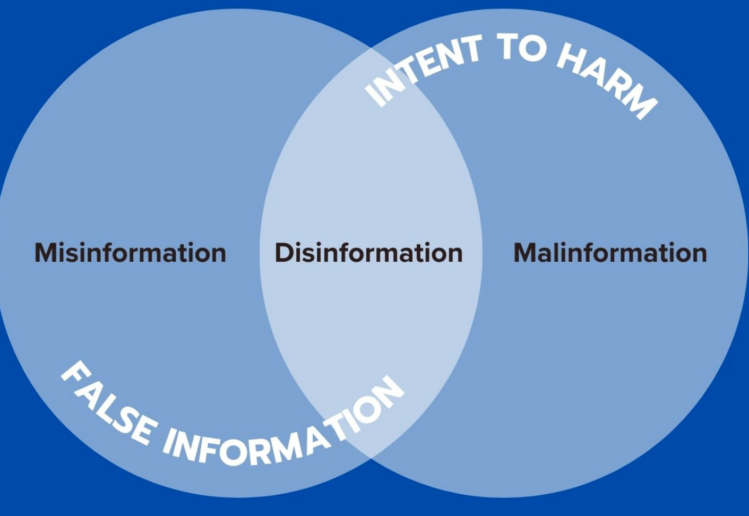
Philosopher Luciano Floridi has a definition I find fundamental: information, to be information, must be true. If the content is not truthful, it is not information — it is something else. Misinformation if it is an unintentional error, disinformation if the deception is deliberate.
Generative AI complicates this in two ways. On one hand, it can produce false content with a fluency and confidence that makes it very hard to distinguish from the real thing. On the other, it can be deliberately used to scale the production of disinformation to unprecedented levels.
Hallucinations as a practical risk
The journalists I interviewed for my master thesis talk about AI ‘hallucinations’ as one of the most concrete risks of using it in newsrooms. Here, everything can lead to misinformation or disinformation A language model can fabricate quotes, attribute statements to people who never made them, mix data from different sources, and present the result with complete aplomb.
For a communicator or a brand, the risk is the same. If you publish AI-generated content without verifying it, and that content contains a factual error, you are responsible for that error. The audience will not blame the algorithm — they will blame you.
Misinformation or disinformation: misuse as an ethical problem, not just a technical one
Several of the journalists I interviewed noted something important: their greatest ethical concern is not AI itself, but the human use of it. An editor at Infobae from Infobae put it with a powerful metaphor: ‘The clearest example is nuclear energy: we can use it to light up a city or we can use it to eliminate every person in that city.’
AI-facilitated plagiarism, the fabrication of non-existent sources, producing content to appear to have researched when you have not — these are all irresponsible human uses of a tool that has no ethical intention of its own.
How to build protocols that protect your work
The first step is defining what you will use AI for and what you will not. That policy does not need to be perfect from day one, but it needs to exist. The three outlets I analyzed in my research have very different levels of protocol formalization to avoid misinformation or disinformation — and the ones with more official show more internal confidence in their processes.
The second step is building a verification culture that predates AI and survives it. Not because AI is especially dangerous, but because verification is the heart of any serious communicator’s work.
The third step is being explicit with your team about the risks. Misinformation does not require bad intent to cause harm. An error repeated thousands of times through social media reach can cause as much damage as a deliberate lie.