November 2022. OpenAI launches ChatGPT to the public and within two months it reaches 100 million users. No technology in history had ever spread that far, that fast. Not the telephone, not television, not the internet.
When that happened, I had already been working on a question that suddenly became urgent: what does generative artificial intelligence do to journalism? And what does it do to everyone who works building meaning, narratives, and communication?
To answer it, I researched it. I conducted in-depth interviews with Argentine journalists from Clarín, La Nación, and Infobae — three of the most influential media outlets in Latin America. I analyzed the institutional discourse of those three newsrooms over two years. I read hundreds of reports, theses, and academic articles on the topic. And I systematized everything into a master’s thesis. What I found was not what I expected.
The tension no one fully resolves
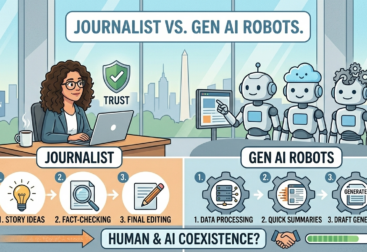
There is a pattern that repeats across every newsroom I studied, and that also shows up in global data: generative AI is seen simultaneously as an ally tool and as a latent threat. You don’t choose between the two. They coexist.
Media executives talk about ‘amplifiers of editorial talent,’ ‘strategic partners,’ and automation that frees up time for quality journalism. Journalists, on the other hand, talk about fear of replacement, pressure to produce more and faster, ethical protocols that don’t exist, and a future that is hard to imagine.
Neither vision is entirely wrong. And that unresolved tension is, I believe, the real state of the profession today.
Why this matters to every communicator, not just journalists
If you work in communication — whether for a brand, an organization, a media outlet, or as a freelancer — the central question of my research is also your question: what remains irreplaceably human in this work? What can you automate without losing what makes you relevant? How do you build trust with your audiences when more and more content is generated by algorithms?
The research I conducted in the journalism world functions as a laboratory. It is the sector that adopted these tools the fastest, the one experiencing the most tensions, and the one with the most to lose if it gets it wrong. Its lessons are ours.
What you will find in this serie of posts
Across four post series, I will translate my research findings into practical reflections for communicators, content strategists, and experience designers.
What AI cannot replace: judgment, instinct, authentic narrative, source work, verification. Everything that remains your differentiator.
Content strategy in the age of algorithms: how to use AI intelligently without losing identity, how to avoid homogenization, how to build audiences who trust you.
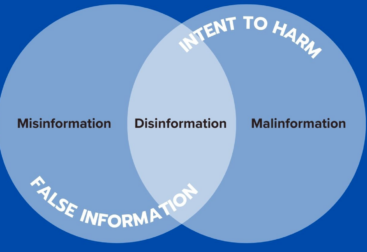
Ethics, transparency, and digital trust: the real risks of misusing AI, how to build protocols, how to communicate with integrity in an ecosystem full of misinformation.
The new media ecosystem: what is changing in the industry, what it means for media companies to become ‘data companies,’ and what opportunities that opens for communicators.
Everything I write here is backed by evidence. These are not loose opinions — they are findings from research that took over two years, built on twelve in-depth interviews, the analysis of 46 institutional resources, and hundreds of academic and international sources.